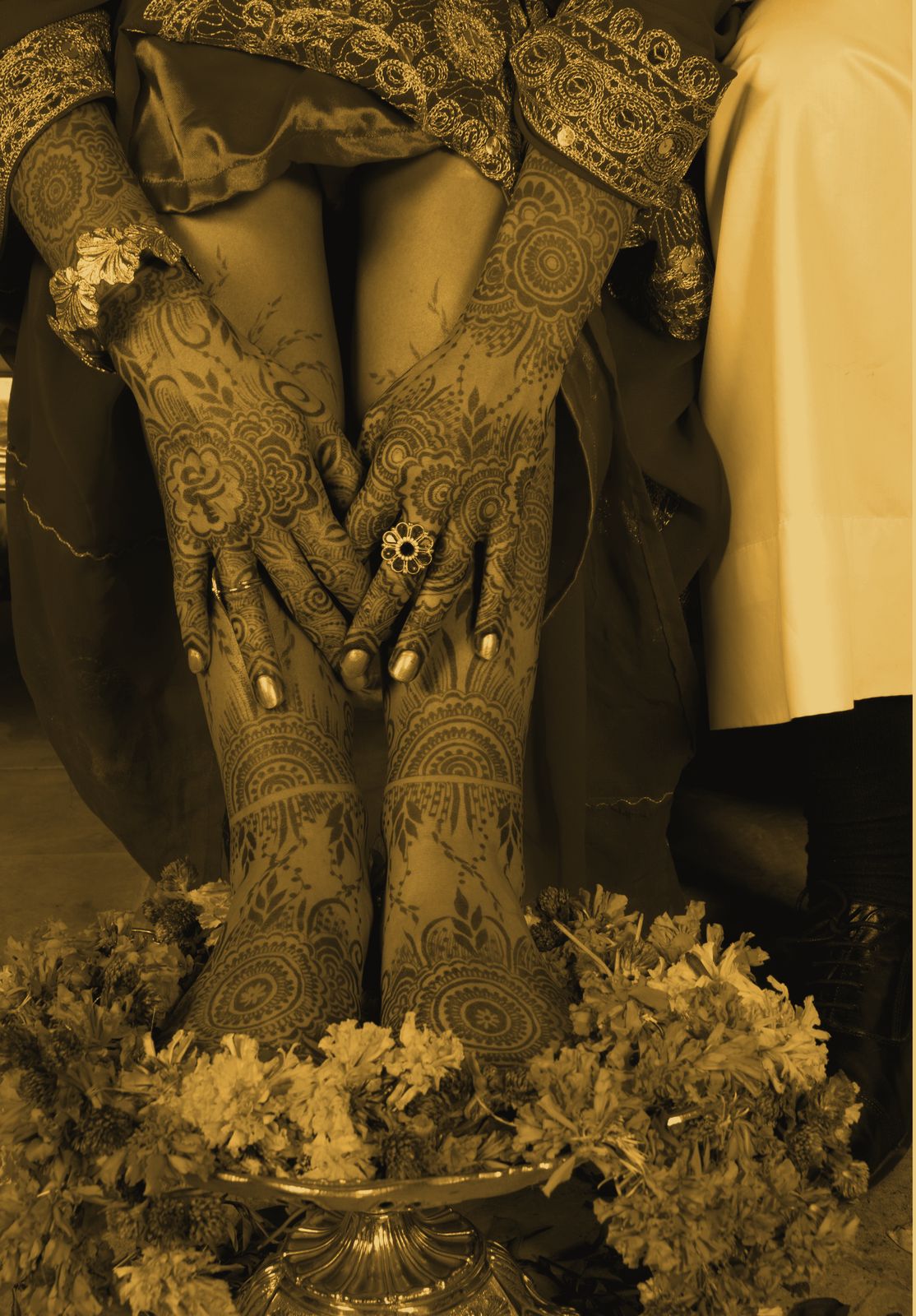
The muhurtham for a haldi is set by the panchangam, not by photographers, and the panchangam has a fondness for early mornings. So day one of a Telugu wedding usually finds me on a doorstep at half past six, watching aunties carry a brass bowl of pasupu across a courtyard while the sun comes up hard and low over the compound wall. Hyderabad in December, Harrow in June – the hour is the same, and so is the light: sharp, horizontal, and completely unforgiving.
It is my favourite light of the entire wedding. This note is about why, and how I work with it.
Hard sun is honest sun
Most wedding photography is built on soft light – window light, open shade, golden hour. A 7am haldi gives you the opposite: sun barely twenty degrees up, cutting sideways across the courtyard, edging every splash of water and every flying handful of turmeric with a bright rim. Shot carelessly it’s a mess of blown highlights and black shadows. Shot deliberately, it’s theatre.
The method is simple to say and hard to do: expose for the highlights and let the shadows fall where they fall. The turmeric holds its colour in the bright patches; the laughing faces around it come and go from pools of shadow; the frame gets depth that no softbox has ever produced. I shoot the whole ceremony at 35mm, wide open or near it, and I never – ever – fire a flash into it. Flash flattens a haldi into a press photo. The morning sun already did the lighting; my job is to agree with it.
Pasupu on wet skin in low sun does something no edit can fake: it glows from inside, like the skin itself has been lit.
Yellow on skin, water in the air
Turmeric photographs differently wet and dry, and the ceremony conveniently provides both. Dry pasupu is matte and dusty and reads as texture. The moment the water arrives – and at every Telugu haldi I have ever attended, water arrives, first ceremonially and then absolutely not ceremonially – it turns glossy and specular, and every smeared cheek becomes a curved mirror for the sun. That’s when I move in close. Hands first: the grandmother’s knuckles in the bowl, the cousin flicking a palmful at the groom, the bride’s mother doing the first, gentle, proper smear while everyone else plots chaos.
And then it stops being gentle, because a haldi is the only wedding ritual whose explicit purpose is to dissolve into a water fight. This is the loudest laughter of the entire three days – louder than the sangeet, louder than the talambralu – and it is completely unphotographable if you’re asking people to hold still. Nobody holds still. Buckets appear from nowhere. I keep one shoulder dry for the camera bag, accept that the rest of me is a casualty, and shoot fast: 1/1000th and quicker, because a thrown arc of yellow water frozen mid-air against a dark doorway is the single best action photograph an Indian wedding offers.
Why I never move the bowl
On every planning call I ask the same odd question: which way does the courtyard face, and which window does the morning light come through? Because the one piece of stage management I allow myself happens before anyone is awake: the bowl of pasupu sits where the light falls. Not the decorated corner. Not next to the backdrop the decorator is proud of. The light.
After that I move nothing and direct no one. The plastic chairs stay. The washing line stays. Somebody’s uncle wanders through the back of frame in a towel, and he stays too, because in ten years that photograph will be the one that makes the whole family howl. A haldi at home is the least curated event of the wedding – that is its entire beauty, and tidying it up for the camera is a kind of lying I try not to commit.
By nine the turmeric is scrubbed off, the courtyard is mopped, and everyone reassembles as their formal selves for the days ahead. But the gallery knows. The haldi frames are the ones with everybody’s sleeves rolled up and nobody’s guard anywhere in sight – three hours of hard light and helpless laughter, before the wedding remembered to be dignified.
If your haldi is at 7am, I’ll be the one who arrived at half six, grinning at the light. Bring the buckets.
← All field notes