Indian & multi-day weddings

Three days.
One story.

A multi-day wedding isn’t three separate jobs – it’s one story with a beginning, a middle and a very loud end. This page is how I cover the arc, from the first smear of haldi to the last song, and the advice I give every couple before it starts.

The arc

How I photograph the three days

Timings below are typical, not fixed – every family runs its own schedule, and the coverage bends to yours.

  1. Day one – morning

    Haldi

    Turmeric, laughter, and absolutely no clean clothes. I shoot close and wide-open, because haldi is about hands – aunties’ hands, grandmothers’ hands, everyone’s hands on you. Nobody poses; there wouldn’t be time anyway. If it’s at home, I’ll have asked on the planning call which window the light comes through, and that’s where the bowl should sit.

    3 hrs · one photographer · 35mm · natural light
  2. Day one – evening

    Sangeet & mehndi

    The rehearsed dances fall apart by song three, and that’s exactly when it gets good. I work the edge of the dance floor while my second photographer keeps a lens on whatever the cousins’ table is plotting. Mehndi is the opposite – the slowest, most talkative hours of the whole wedding, and where the quiet portraits happen without anyone posing for them.

    4 hrs · two photographers · low light, no interruptions
  3. Day two

    The ceremony

    Baraat, varmala, pheras – or a church, a gurdwara, a registry office, or two ceremonies back to back. I never stop a ritual for a photograph; your priest and I will be old friends by the seventh circle. At a Telugu pelli I already know where to stand for the jeelakarra bellam and which aunt will run the talambralu – the next section goes deeper. Family group photos happen in one planned twenty-minute burst, then I disappear into the crowd again.

    8 hrs · two photographers · no flash during rituals
  4. Day three

    The reception

    Speeches, the first dance, and the quiet bit at the end when it’s just family left and someone’s uncle starts singing. I stay for that. The best photograph of the whole wedding is usually taken in the last hour, long after the schedule has given up.

    6 hrs · two photographers · stays till the singing

The Telugu pelli

Pelli moments I never miss

Half my weddings are Telugu, split between London venues and Hyderabad function halls. These rituals move fast and don’t repeat – knowing them cold is the job.

the terasala drops · 85mm, no flash

Jeelakarra bellam

Cumin and jaggery pressed onto each other’s crowns at the exact muhurtham, the curtain still between you. I stand where the terasala will fall, because your first look at each other as a married couple lasts about a second and a half – and your parents’ faces last even less. Both cameras are on this one.
rice, laughter · 1/1000s

Talambralu

It starts ceremonial and ends competitive, and there’s always one grandmother urging someone to aim higher. I shoot it fast and wide from below the dais – rice in the air reads like confetti, and for once nobody is looking anywhere near the camera. Usually the loudest ten minutes of the entire pelli.

whenever the panchangam says

The muhurtham

Auspicious times don’t negotiate. I’ve photographed a 2am muhurtham in Hyderabad and a dawn one in Harrow, and both galleries look like the middle of a celebration – because they were. Coverage bends around the panchangam, not the other way round; the sleep maths is my problem, not yours.

three knots · close work

Mangalsutra & metlu

Three knots, two families holding their breath, then the toe rings. I work close with a quiet shutter and never ask the pantulu garu to pause – by the seventh time he glances over, we’re already old friends. The second camera holds the wide frame so the whole mandap stays in the story.

Half our wedding happened at three in the morning and Arjun photographed it like it was midday. The talambralu photos are chaos in the best way – my grandmother framed the one where she’s clearly winning.
Nikhil & ShruthiThree-day pelli · Hyderabad
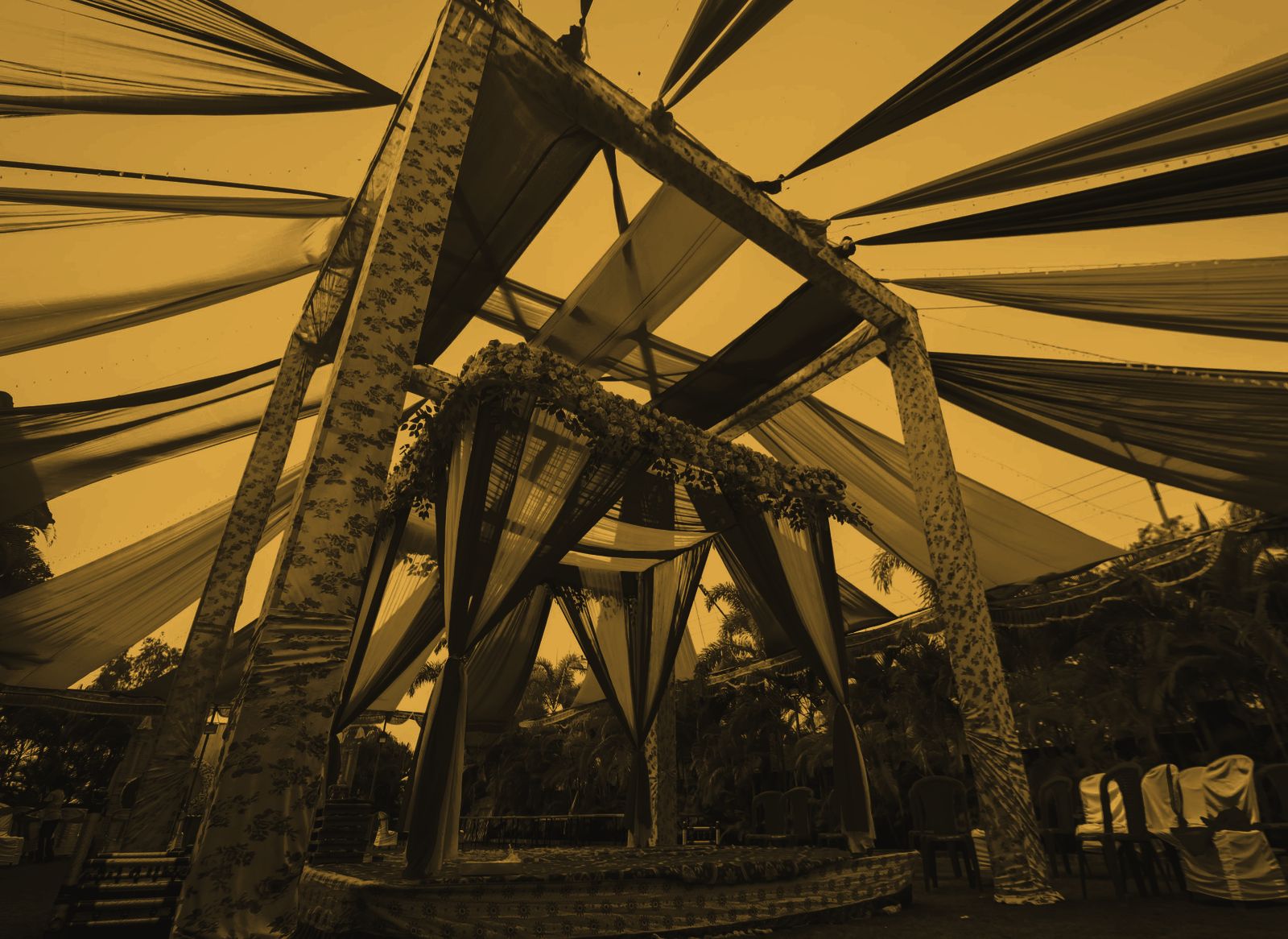
A pillared mandap under radiating canopy drapes at dusk, garlanded and empty before the guests arrive
Day two, 5:40pm – the mandap, twenty minutes before the families arrive

Timings

Advice I give every couple

You don’t need a minute-by-minute plan – you need slack in the right places. This is what I say on every planning call.

  • morning
    +45 min

    Pad the morning, not the evening

    Hair and make-up have overrun at every wedding I’ve photographed. The morning absorbs delays; the evening never gives them back. Build forty-five minutes of slack before you’re due to leave, and the whole day breathes.

  • golden hour
    10 min

    Ten minutes at golden hour beats an hour at noon

    I watch the light all day and tap you on the shoulder when it’s time – usually while your guests are starting dinner. Ten unhurried minutes in good light out-photographs an hour of posing under a flat midday sky.

  • family list
    20 min

    Eight groups, one list, one bossy cousin

    We agree the family groupings on the planning call and appoint your most organised relative to gather people. Eight groups take twenty minutes. Twenty groups take an hour and a half, plus everyone’s patience.

  • baraat
    45 min

    Give the baraat more time than you think

    No baraat in history has covered a hundred metres in fifteen minutes. Forty-five is realistic. The dhol player sets the pace, not the schedule – and honestly, it should be that way.

  • evening
    10pm

    Do the sparkler exit early, then keep dancing

    Stage the send-off at ten, while two hundred people still have energy and the sparklers have supervision. The photographs need the crowd more than the clock – and you get to stay for the last song.

Two cameras

The second-shooter setup

Every multi-day wedding includes a second photographer – not for safety in numbers, but because the best moments of an Indian wedding happen in two places at once.

Who they are

Always one of two people – Dev or Meera, documentary photographers I’ve worked alongside since 2019. Same approach, same discretion. Their frames sit in your gallery without a visible join, because I edit every photograph myself.

The baraat split

While I’m in the street with the dhol and the dancing, the second camera is inside with the bride’s family watching from the window. Both halves of that moment happen exactly once, simultaneously. You’ll want both.

During the ceremony

I hold the couple and the ritual; the second camera lives on the front rows – your mother during the kanyadanam, your grandfather pretending he isn’t crying. Neither of us uses flash, and neither of us crosses the mandap.

Sangeet, both ends

One camera at the edge of the dance floor for the performances, one on the tables for the reactions – the cousins mouthing every word, the uncles judging the choreography. The reactions are usually the better photographs.

Check my date

Planning a multi-day wedding?

Tell me the dates and the city – London, Hyderabad, or anywhere between. If the weekend is free, I’ll pencil it in for seven days while you decide.

One wedding per weekend · replies within one working day
WhatsApp Arjun