Forty guests is a family lunch. Four hundred is a logistics exercise wearing a silk saree – and the mistake people imagine we make is simply multiplying by ten. A wedding kitchen does not scale that way. Some things must be made two days early or they are worse; some things must be made in the final hour or they are ruined; and the craft is in knowing, dish by dish, which is which.
Two days out
The sweets that improve with patience are made first. Kaja is fried and soaked two days ahead, because the syrup needs time to reach the middle of every flaky layer – a kaja eaten too young is crisp all the way through, which sounds like a compliment and is not. Ariselu rest alongside them, their jaggery settling. The pootharekulu arrive by courier from Atreyapuram itself, because paper-thin rice starch is one of the few things we refuse to imitate. And the avakaya was made months ago, in mango season, waiting in jars for exactly this weekend.
Two days out is also when the dietary list closes. Every allergy on it becomes a named, individually plated meal – labelled by guest, not by table – and one chef takes responsibility for every one of them.
The night before
For a wedding weekend, Friday night belongs to two crews at once. One is still running the sangeet counters – the midnight mirchi bajji batch is non-negotiable – while a completely fresh crew starts the pelli bhojanam back in Wembley. The biryani begins here: meat into its marinade overnight, rice washed and drained, the handis checked. Nothing about a dum biryani can be hurried the next day, so everything that can be done early, is.
The morning of
The boondi laddu is rolled the morning of the event, every time – warm, loosely packed, properly ghee-heavy. Rolled a day early it tightens into something you could bowl overarm. The chutneys are ground at dawn for the same reason. Idli steams in wave after wave of baskets, timed so the first tiffin counter at the venue opens with idli that came off the steamer within the hour.
Batches, not vats
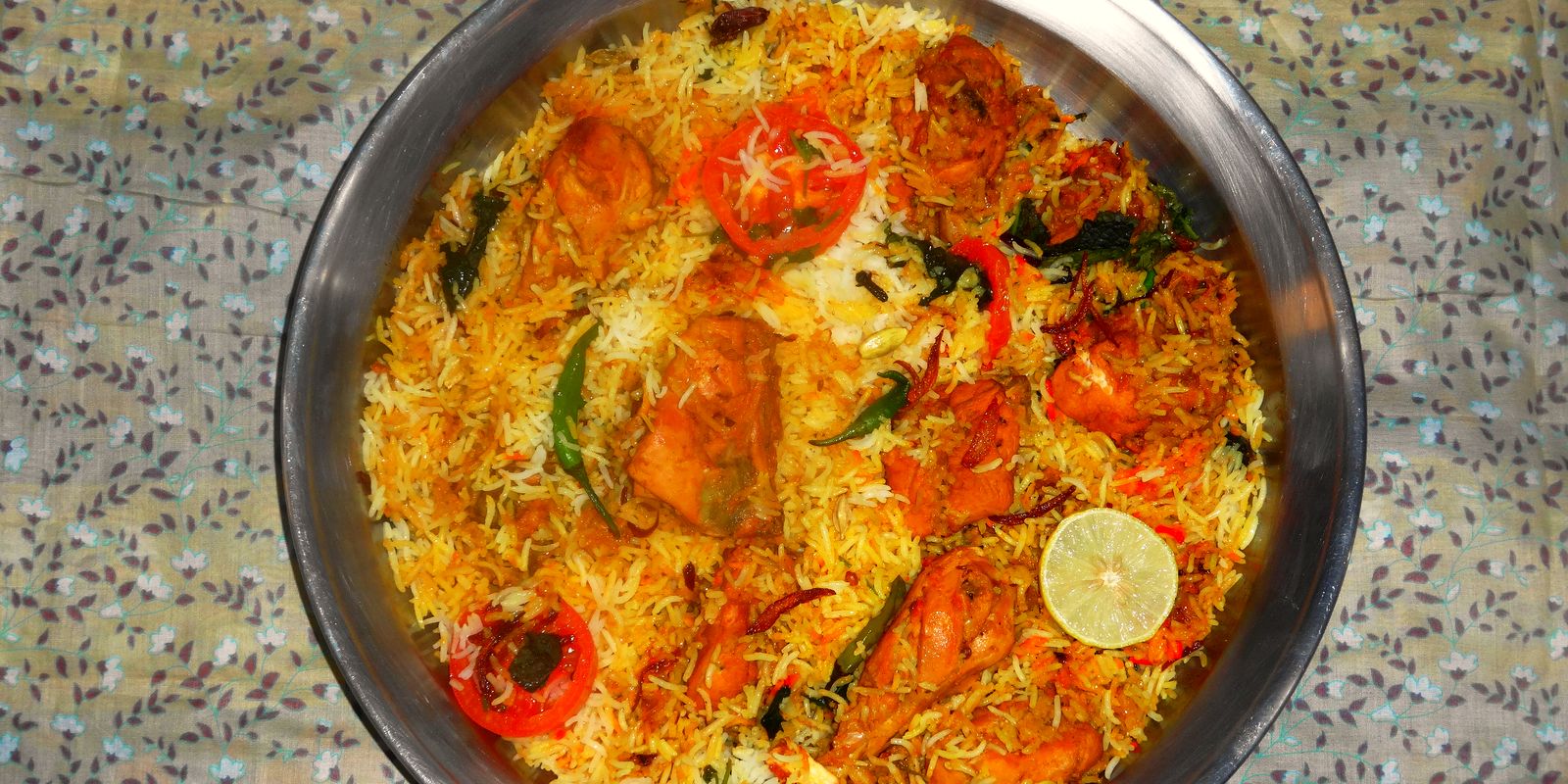
Nothing for four hundred is cooked in one heroic pot. The biryani goes into sealed handis, layered, lidded and sealed with dough, then opened at service in front of the guests – each handi feeding its wave of tables, each opened only when its wave is seated. Rice, sambar and rasam run in rolling batches sized to about forty guests, so the food the ninth table receives was finished as recently as the food the first table received. Hot-holding has its place, but that place is not the centre of a pelli bhojanam.
Counters run to a clock
A live counter looks improvised and is anything but. The six-foot tawa at a dosa station serves a queue at a steady rhythm all evening, and we station enough chefs that the queue stays part of the fun rather than a test of character. Chaat and pani puri are filled at the counter, never pre-made – which means the counter’s prep, all the chopping and boiling and tamarind, happened back in Wembley so that the only thing happening in front of guests is the good part. At a sangeet, the Irani chai and mirchi bajji counter is the long-distance runner: it opens with the evening and closes when the dancing does, and its crew is briefed to keep the last hour as generous as the first. People remember the midnight batch precisely because nobody was rationing it.
The bhojanam wave
When the talambralu fly, the leaf service begins. Elders first, always. The servers walk the line in the correct order of the leaf – salt, pickle, pachadi, kura, pappu, then the rice and its ghee – and the sambar comes round again without anyone having to ask, because at a proper bhojanam nobody should ever have to ask. Both grandmothers’ non-negotiable dishes are present, correct and within reach.
There is an arithmetic of hands, too. A four-hundred-guest bhojanam runs on roughly one trained leaf server to every twenty-five seated guests, plus runners keeping the line supplied, plus the counter chefs, plus the two people whose only job is hot filter coffee for the elders. It looks like abundance from the hall. From the kitchen door it looks like a rota, written twice and checked three times.
What never changes with the number
Whether it is forty guests or nine hundred: vegetarian and non-vegetarian run on separate cooking lines, with separate utensils and separate serving crews. Puja food is cooked without onion or garlic on its own line when asked. The allergen matrix for every dish exists before the tasting, not after a question. Scale changes the number of vans, burners and hands. It is not allowed to change anything else.
That is what “from £24 per guest” actually buys: not four hundred portions, but four hundred people fed as carefully as forty.