Every enquiry we take begins with the same question, asked before guest counts, before menus, before anyone mentions a venue: what time is the muhurtham? Not the morning. Not “around eleven”. The minute. In a Telugu wedding almost everything is negotiable – the hall, the flowers, even the date of the reception – but that minute is not, and a caterer who does not understand this will spend the day being surprised.
One minute, fixed months ago
The muhurtham is usually settled long before the venue is. At the nischitartham the priest reads the lagna patrika – the written fixing of the wedding date and its auspicious time – aloud to both families, and from that reading onwards the minute belongs to everyone. Grandparents book flights around it. Venues are shortlisted by whether they can hold it. And at that minute, and no other, comes the jeelakarra-bellam: the paste of cumin and jaggery pressed to each other’s crowns while the priests chant. That is the moment of marriage in a Telugu wedding – not the rings, not the register. Everything we do in the kitchen either serves that minute or stays quietly out of its way.
Reading the day backwards
Suppose the lagna patrika says 11:22 on a Saturday morning. We plan the food by walking backwards from it.
Just after the muhurtham come the mangalya dharanam and the talambralu – three knots, then the rice-shower everyone came for. As the talambralu fly, our crew is already opening the bhojanam lines, because four hundred people who have watched a wedding since nine o’clock are hungry in a way that does not queue politely. Elders are seated and served first, on the leaf, in the correct order of the leaf.
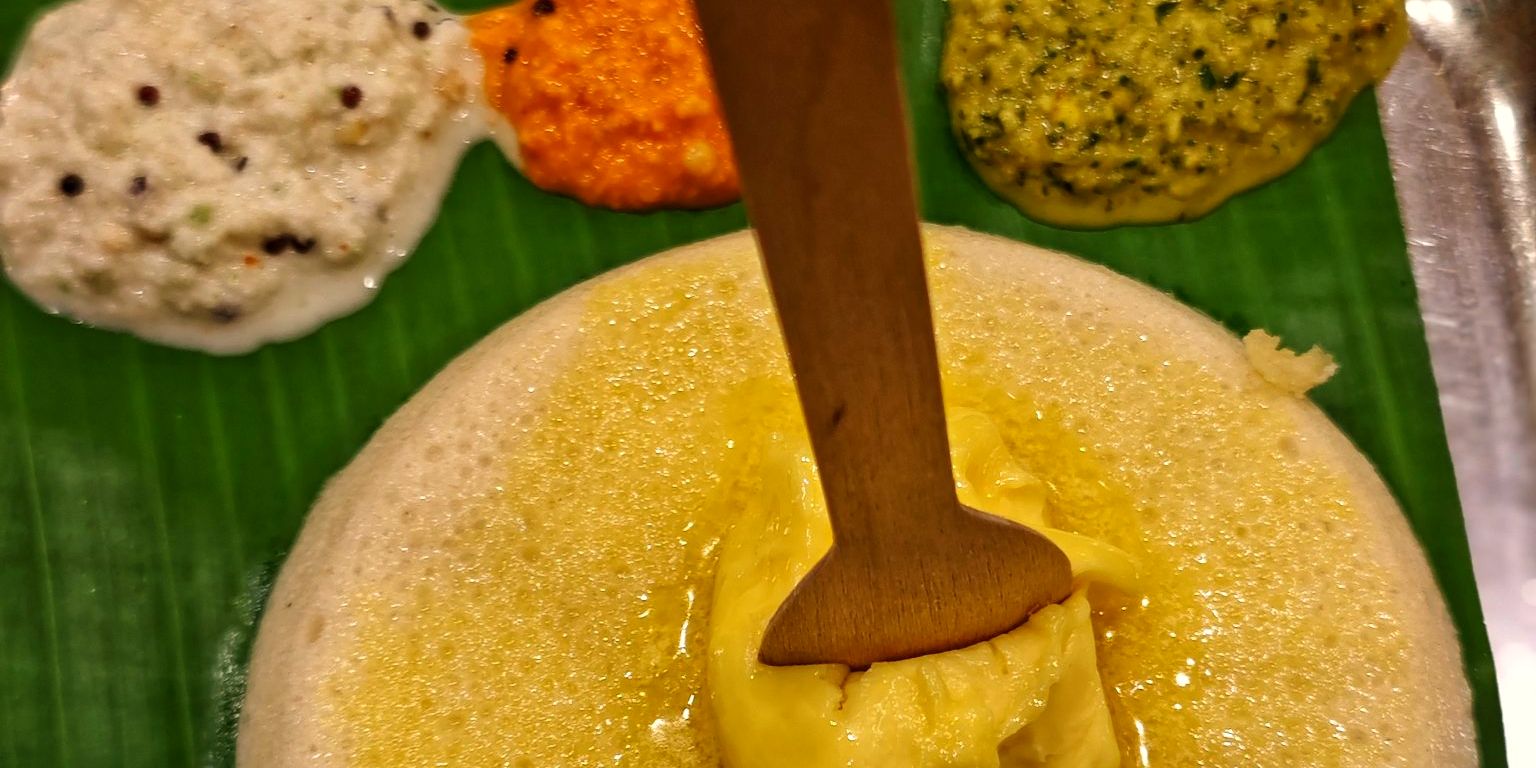
Before that: guests arrive from about half past eight, while the bride and groom are still in their separate Gauri and Ganapati pujas. Early guests are hungry guests, so the tiffin counters are open before the first aunties reach the door – idli, pesarattu, filter coffee going out while the kashi yatra is still being talked out of its departure.
Before that: the mangalasnanam, the auspicious bath taken at a time the priest sets, often before dawn. Nobody expects catering at a bath. They do expect breakfast afterwards, and the wedding-morning tiffin for close family is on the table at home by seven – hot, unhurried, and cleared before the cars leave for the venue.
The kitchen clock behind it
For that seven o’clock tiffin, the Wembley kitchen fires at three. Idli batter has been fermenting since the previous afternoon; the first steamer baskets go on while the ovens warm for the day’s bobbatlu; the chutneys – peanut, coconut, allam – are ground that morning, never the night before, because everyone can taste the difference even if nobody can name it. The vans load in the order the day will unfold: home tiffin first, venue tiffin second, bhojanam last, so nothing waits hot for longer than it should.
When the minute falls at night
Not every muhurtham is a mid-morning one. Priests fix what the panchangam gives them, and we have catered weddings where the auspicious minute fell at half past one in the morning. The plan does not change; it rotates. Supper takes the place of lunch, the tiffin counters open at eleven at night instead of nine in the morning, and there is hot filter coffee within reach of every grandparent staying awake for the knots. Guests must be fed properly on both sides of the muhurtham – that rule holds whether the sun is up or not. We have never asked a priest to hurry, and we are not going to start at 1am.
What we check before we promise
The minute also decides our questions for the venue, which is why we ask families to send us the venue details before signing the contract. When can we and the mandap crew get in – because a mandap built to the priest’s requirements, east-facing where the hall allows, cannot be rushed into an hour’s access. Is there power where the live counters will stand? What are the open-flame rules for the homam, and has the venue signed them off in writing? How long do we have the kitchen after the appagintalu, when the sweets boxes have been counted, ribboned and handed over at the door?
And because the food and the rituals share one clock, we lay out the priest’s full puja list with the planning team before anyone has to ask – the talambralu rice, the kalash, the betel leaves, all where the priest expects them, all counted the night before. A wedding morning has enough moving parts without someone driving across London for turmeric at nine o’clock.
None of these questions is exotic. They are just easier to answer eleven months before the wedding than eleven hours before the muhurtham.
So when you write to us, skip the pleasantries if you like – but send the minute. Everything we are good at starts from there.